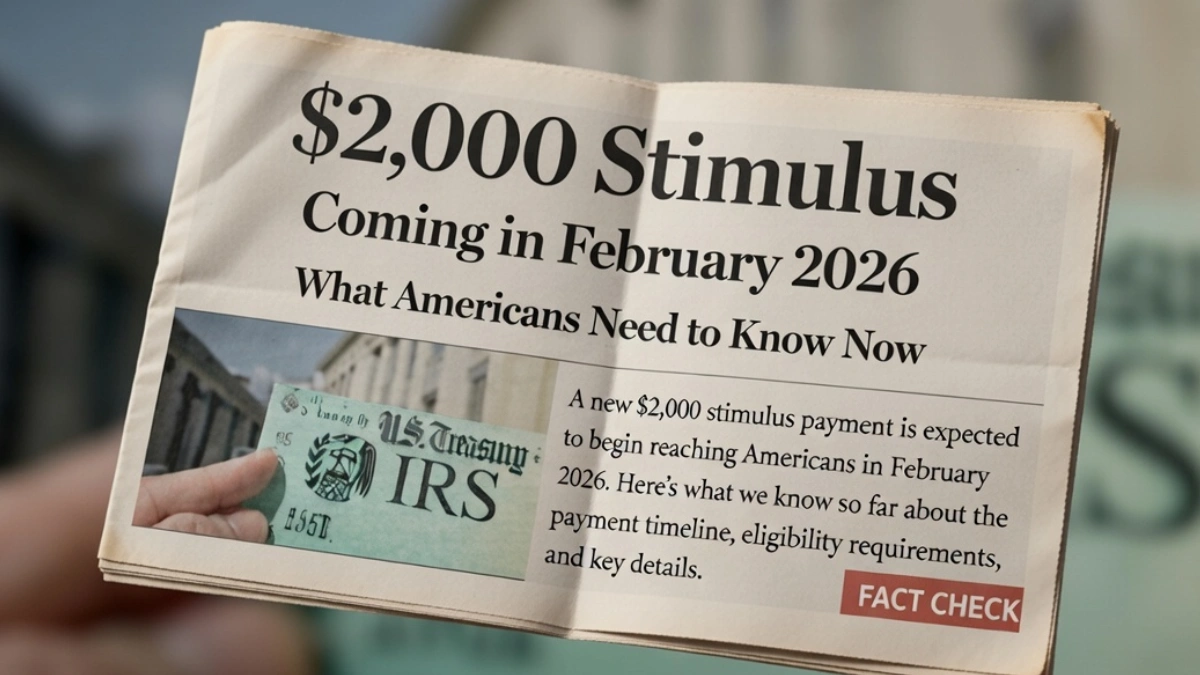
As tax season and the new year begin, many Americans are seeing claims online about a February 2026 stimulus payment often quoted as $1,500, $2,000, or another fixed amount arriving automatically. Viral posts on social media and some sensational headlines make declarations without official backing. Before acting on any claim, it’s important to understand what the government has officially confirmed versus what is misinformation or misunderstanding.
What the Government Has Actually Announced
As of now, no federal agency, including the Internal Revenue Service or the U.S. Department of the Treasury, has announced a scheduled “stimulus payment” for February 2026. Government stimulus payments require specific legislation passed by Congress and signed by the President. Without this legislative approval and a clear announcement from an official source, widespread payments like those being claimed are not genuine government programs.
Common Sources of Misinformation
Most stimulus payment claims arise from misunderstandings of other legitimate tax or benefit programs. For example, tax refunds, refundable credits like the Earned Income Tax Credit (EITC) or Child Tax Credit (CTC), or delayed tax returns may show up in early 2026. These are not stimulus payments but are instead tied to individual tax filings. Confusion around these official programs can lead to false interpretations presented as universal payments.
Legitimate Payments to Expect in Early 2026
While a designated “stimulus check” has not been approved for February 2026, taxpayers should be aware of payments that can occur legitimately around that time:
| Payment Type | How It Happens | Typical Timing |
|---|---|---|
| Tax Refund | Based on your 2025 return | Within weeks after filing |
| Earned Income Tax Credit | Eligible filers | With refund |
| Child Tax Credit (refundable portion) | Eligible dependents | With refund |
| Social Security Payments | Scheduled by SSA | Monthly deposits |
| Unemployment Benefits | State‑issued | As scheduled |
This table shows real benefits that may deposit around the start of 2026, emphasizing they are not “stimulus” payments unless Congress passes a new program.
Why Viral Stimulus Claims Spread
Claims about automatic stimulus deposits often spread because they are catchy or hopeful. Posts may be tied to unofficial sources, unverified tax software pop‑ups, or third‑party websites promising early access to “$2,000 checks.” These claims are inaccurate when they are not based on an official government announcement. Sharing these posts without verification can mislead others and create unrealistic expectations.
How to Verify Official Information
The most reliable way to check for official government payments is through authoritative sources such as IRS.gov, the U.S. Department of the Treasury, or the White House press releases. These sources will provide clear information if any new programs are enacted. Avoid trusting social media claims without confirmation from these official channels.
What You Should Do Before Filing Taxes
Before submitting your 2025 tax return, ensure all personal and financial information is accurate. Filing electronically with direct deposit information increases the speed of legitimate refunds. Use official IRS resources or reputable tax professionals to help you prepare and submit your return. Don’t rely on unofficial pages or pop‑ups that claim instant stimulus access.
Conclusion
There is currently no verified federal stimulus payment scheduled for February 2026. Claims portraying guaranteed payments without confirmation from government authorities are misleading or false. Taxpayers should focus on legitimate refund opportunities tied to their 2025 filings, refundable credits, and regular benefit payments. Monitoring official government channels ensures that you receive accurate updates rather than rumors.
Disclaimer: This article is for informational purposes only. Government programs, tax laws, and benefit disbursements are subject to change and rely on official announcements from relevant agencies and legislation. Always verify information through official government websites or qualified tax professionals.