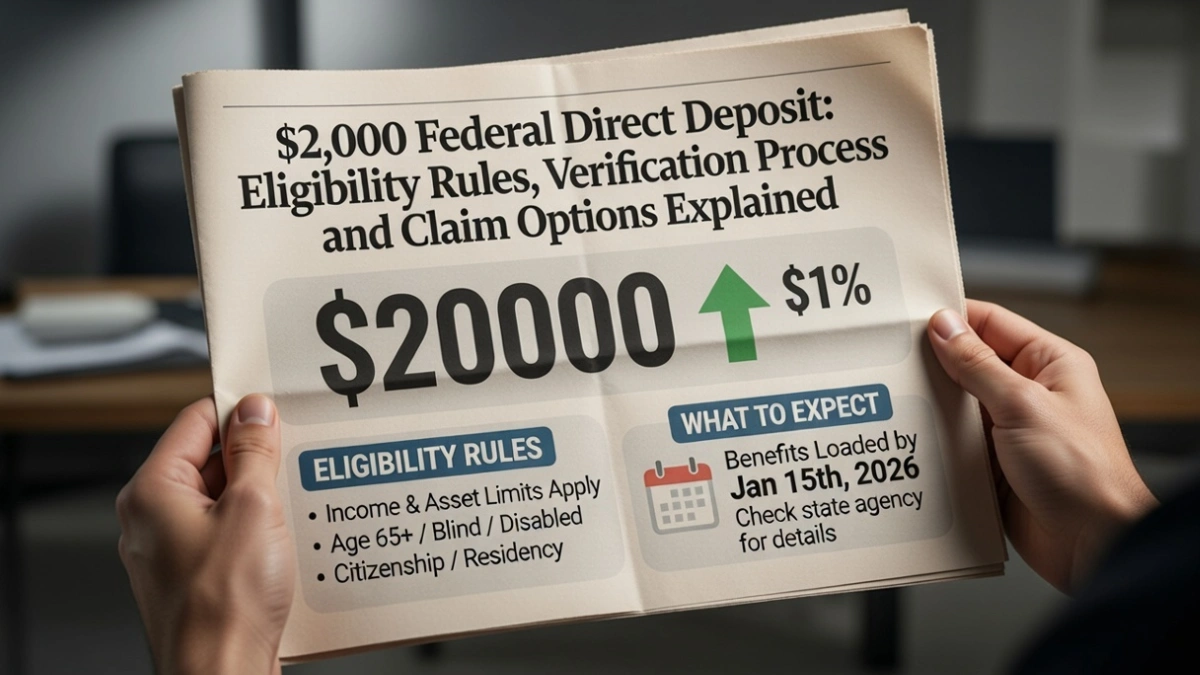
The possibility of a $2,000 federal direct deposit payment has drawn widespread attention among taxpayers and households seeking financial relief. While discussions about federal assistance programs continue, it is important to understand how eligibility rules, verification procedures, and claim options typically function in such initiatives.
If officially authorized, payments would likely be distributed primarily through direct deposit to ensure faster and more secure transfers.
Eligibility Rules for Potential Beneficiaries
Eligibility for a $2,000 federal direct deposit would generally depend on income thresholds, tax filing status, and legal residency requirements. Most federal payment programs use recent tax return data to determine qualification. Individuals whose adjusted gross income falls within approved limits may qualify automatically.
High-income earners above established thresholds may be phased out. Individuals claimed as dependents on another tax return could also be excluded depending on final program rules.
Income Verification and Tax Filing Requirements
Federal agencies typically verify eligibility using tax records. Those who have filed recent federal returns and provided valid Social Security numbers are more likely to be included in automatic payment lists.
Non-filers or individuals with outdated information may need to submit updated records through official government portals. Accurate income reporting and consistent filing history are critical for approval.
Verification Process Before Payment Release
Before any funds are disbursed, identity verification and banking confirmation checks are conducted. Agencies cross-check Social Security numbers, date of birth, filing status, and bank routing information to prevent fraud or duplicate payments.
Incorrect bank details, mismatched identification data, or closed accounts may cause delays or rejected deposits. Maintaining up-to-date records is essential for smooth processing.
Key Details of the Proposed $2,000 Direct Deposit
| Component | Description | Notes |
|---|---|---|
| Payment Amount | $2,000 | One-time federal payment if approved |
| Eligibility Basis | Income and tax filing status | Subject to federal thresholds |
| Verification | Identity and bank account checks | Mandatory before disbursement |
| Distribution Method | Direct deposit preferred | Paper check alternative possible |
| Claim Option | Automatic or manual update | Depends on filing history |
This table outlines the core elements of how a $2,000 federal direct deposit program would likely operate if formally announced.
Claim Options and How Payments May Be Issued
In many federal payment programs, eligible taxpayers who have filed recent returns and have direct deposit details on file receive payments automatically. Others may need to update banking information or confirm eligibility through secure online portals.
Paper checks or prepaid debit cards may be used in cases where direct deposit information is unavailable, although these methods usually take longer to process and deliver.
Common Reasons for Payment Delays
Delays often result from incomplete tax filings, identity verification issues, incorrect bank routing numbers, or discrepancies in Social Security information. Payments sent to closed bank accounts may be returned and reissued, extending the timeline.
Responding promptly to official notices and reviewing documentation carefully can significantly reduce potential processing issues.
Conclusion
The proposed $2,000 federal direct deposit could provide meaningful financial support if formally approved. Eligibility would likely depend on income thresholds, tax compliance, and successful identity verification. Individuals should ensure that tax records and banking details are accurate and remain attentive to official government announcements for confirmed updates.
Disclaimer: This article is for informational purposes only. The $2,000 federal direct deposit payment has not been confirmed as a guaranteed nationwide program unless officially announced by federal authorities. Eligibility criteria, verification procedures, and payment timelines are subject to change based on formal government decisions. Readers should consult verified government sources or certified financial professionals for accurate guidance.